Integrated Underground Transit System
Submit your solutions to provide an integrated underground transit management system.
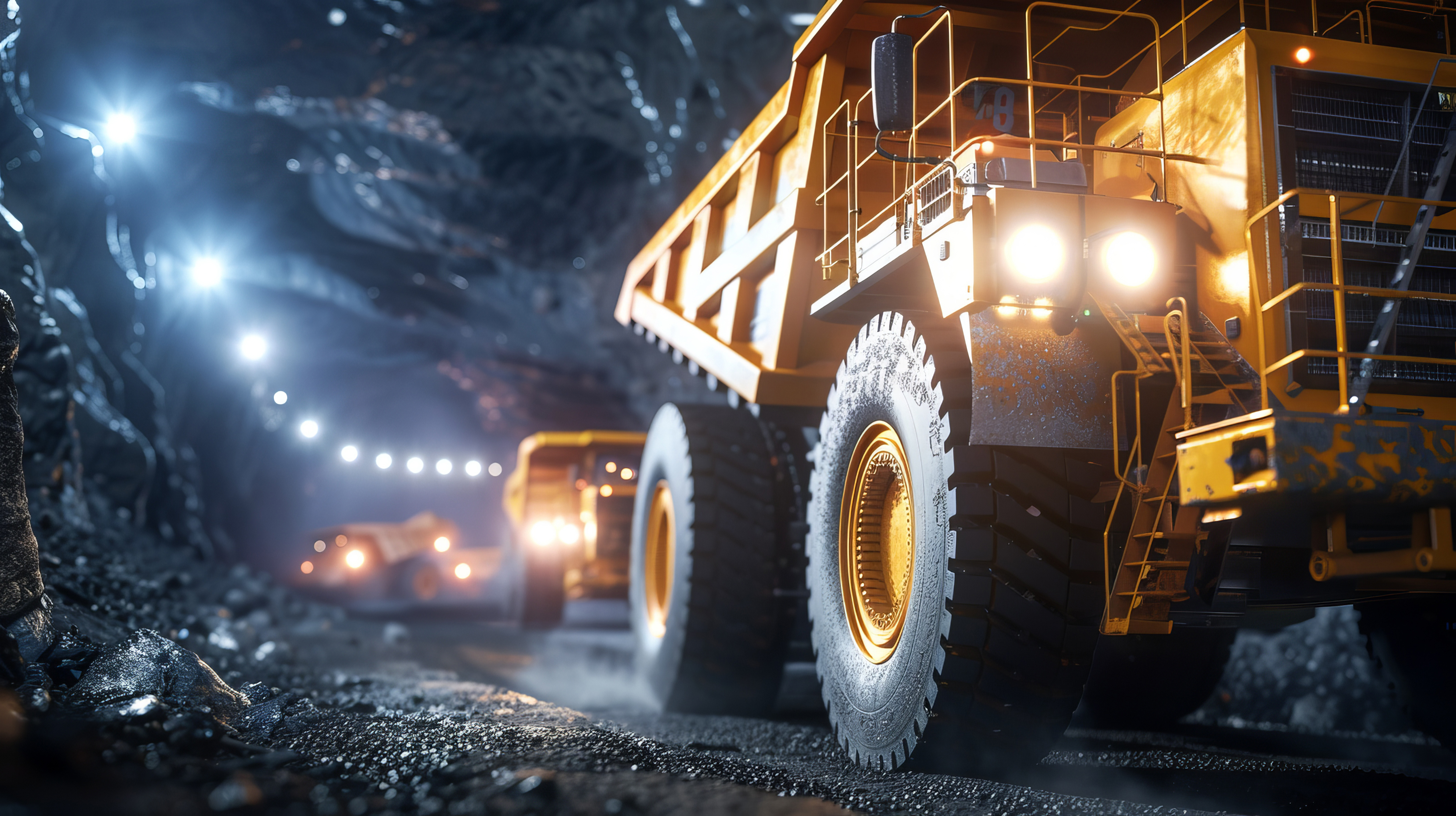
Alpayana is a Peruvian mining group specialised in underground mining, producing zinc, lead, copper and silver, with four mining units in the central highlands of Peru: Americana, Yauliyacu, Iscaycruz and Morococha.
Alpayana’s Americana Mining Unit is an underground polymetallic mine that produces zinc, copper, lead and silver, located in the province of Huarochirí, north of Lima, at an altitude of 4,600 meters above sea level. Approximately 200 vehicles per day, including dump trucks, scoops, and jumbos, circulate through the underground operations of the Americana Unit, traveling on different levels without a traffic control or guidance system.
Alpayana is seeking to improve their underground transit management through intelligent integrated systems.
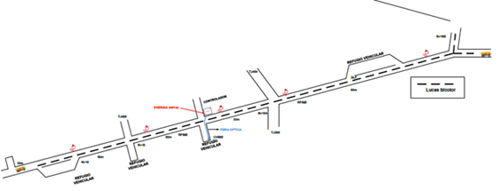
The lack of coordination of vehicles generates congestion, downtime, and a risk of accidents in the underground operations, particularly on level 19 (out of a total of 25 levels), shown in the below image, where the main crossing points are concentrated.
In this context, dump trucks are the most affected vehicles, as they operate continuously between levels and are critical for the removal of ore and waste rock.
The main operational consequences are:
- Losses of up to 45 minutes per event due to traffic blockages or congestion.
- Reduced productivity due to waiting times and unnecessary travel.
- Increased fuel consumption and equipment wear.
- Risk of collision and exposure of personnel in confined spaces.

A pilot program has been implement using traffic lights at key vehicle crossings and sensors on dump trucks that record their location and behaviour in real time.
These trials have improved visibility and signage, but the system is not yet integrated into a centralised platform. It is important to note that the mine has fibre optic network infrastructure at certain levels, including 300 meters of the main ramp on level 19, and WiFi coverage in strategic areas.
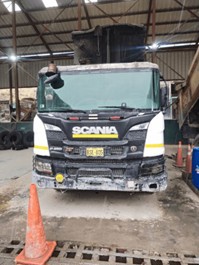
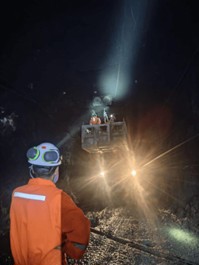
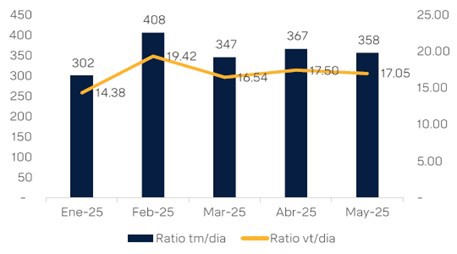
Operational analysis shows that dump trucks make an average of 17 trips per day, transporting approximately 350 tons daily, with peaks of 408 tons. It is estimated that smart traffic lights would allow for one additional trip per dump truck per day, generating a potential economic impact of USD $170,000 annually in productivity.
Alpayana is seeking solutions across two approaches:
1. Proposals that complement the current traffic light system by integrating it with the central platform for the mine.
2. A new fully integrated traffic control system.
The implementation of an intelligent, automated traffic light system will enable dynamic and centralised management of underground traffic, allowing for real-time detection, prioritisation, and regulation of equipment movement.
Expected results:
- Congestion reduction of up to 45 minutes per event.
- Reduction of waiting time at critical points.
- 10% increase in productivity of the transport fleet, meaning at least one additional trip per dump truck per day.
- Improved road safety and a reduction in incidents.
- Estimated annual savings of USD $170,000 in operational efficiency.
Technical criteria:
- Prioritise the use of Ethernet, OPC-UA, and MQTT communication protocols.
- Integration with Alpayana’s control systems (Rockwell) and IT platforms (CANARY).
- Scalability to other mining units.
- Robustness to operating conditions such as dust, humidity, vibrations, frost, and low light.
Limitations or special considerations:
- The project is planned as a pilot program with an estimated duration of 2 to 4 months.
- The provider must have expertise in mining, its key performance indicators (KPIs), and the ability to connect to the internal network.
- The implementation must integrate seamlessly with existing operations, without requiring changes to the operational structure or the addition of new ones.
- The technology must be at a Technology Readiness Level (TRL) between 6 and 10.
Phase 1 - Submission Period
Suppliers are invited to submit their short-form solution to the challenge by Wednesday 4 February 2026 for evaluation by Austmine and Alpayana.
The solution submission questions can be viewed here.
A shortlisting process takes place and successful suppliers are invited to participate in phase 2.
Phase 2 - Evaluation Period
Shortlisted suppliers will be invited to a technical briefing, where each supplier will be able to gain more information about the challenge from Alpayana. This will allow you to refine your proposed solution prior to the Pitch Session.
Following the technical briefing, suppliers will pitch their solution directly to Alpayana online via Teams breakout rooms. This provides the opportunity to ‘sell’ your solution, gain feedback from operational teams and field questions about the solution.
Phase 3 - Full Proposal Submission
Following the Pitch Session, a final shortlisting of supplier(s) takes place. The remaining suppliers are invited to submit their formal technical and economic proposals.
Winner Announced
Alpayana will select the best fit solution(s) for the challenge. Unsuccessful submitters are notified in writing by Austmine.
Submission deadline - Thursday 19 March 2026
Shortlisted Suppliers Notified - early April 2026
Technical briefing - April 2026
Pitch sessions - April 2026
Final proposal deadline - May 2026